T CrB
What is T CrB?
It’s a repeating “exploding” star with a period of about 80 years.
T CrB is normally a faint star that requires a telescope to see, but will easily become visible to the naked eyes, probably within the next year (2026 to 2027), an event that happens for a few days about every 80 years or so.
Technical, T CrB is a NOVA star! It has also been given the name, Blaze Star.
T CrB is the abbreviation for the designation of a star. In this case it refers to the star T in the constellation Corona Borealis (CrB), the Northern Crown. The “t” is always a capital T and was given this letter to designate it as a variable—a star that varies in brightness (Yes, there are other variables in this constellation designated with other capital letters).
T CrB is technically not a variable star but a NOVA that cyclically brightens about every 80 years for a short period of time. Normally, this star has a magnitude of around +10 which means that one needs at least a 3-inch diameter telescope to see it. When it brightens to about magnitude +2, it will be plainly visible to the naked eyes. The North Star, Polaris has a magnitude of +2.0. There are very few documented sightings of T CrB’s brightening—four spanning over 1000 years. The last time it brightened was in 1946.
Why does T CrB brighten—what is a NOVA star? There are very few known Nova stars so they are rare. T CrB is a system of two stars, one a dense and small White Dwarf orbiting very close to a normal-type star (our Sun will become a White Dwarf at the end of its life). The White Dwarf gravitationally pulls hydrogen gas from the normal star and when this builds up to a critical mass, this material ignites creating a flash. The White Dwarf is not consumed because the flash is from material surrounding it.
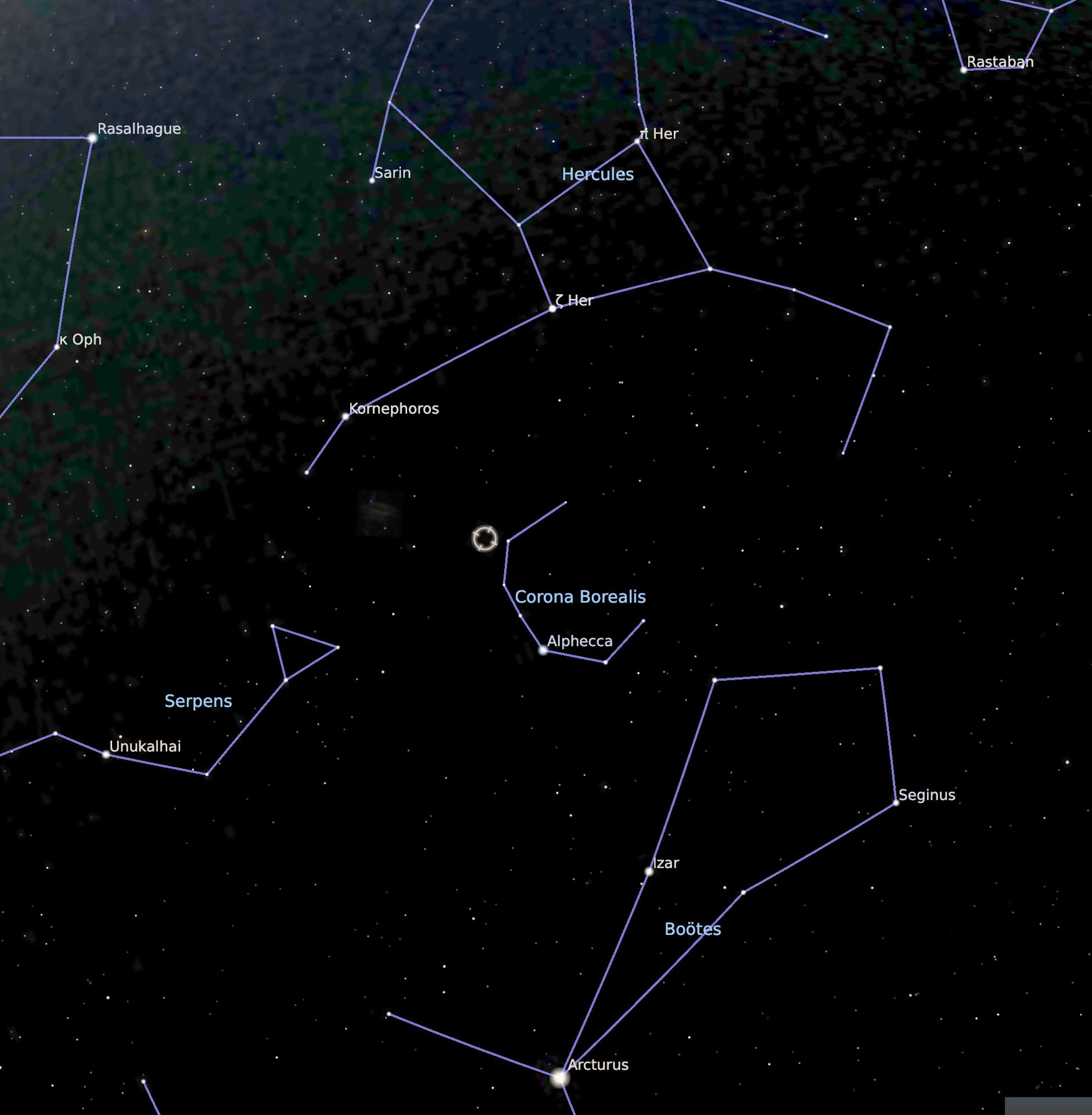
Location of T CrB, indicated in the very middle, within the circle. Corona Borealis is a Northen Hemisphere constellation between the constellations of Bootes and Hercules. Corona Borealis as a constellation is visible most of the year, however, it is not, overall, as bright as Hercules and Bootes. The star Arcturus in Bootes is the third brightest star in the whole sky. When T CrB brightens, it will most likely be as bright as Alphecca in Corona Borealis and stay bright for a few to several days. This image is from the free planetarium program Stellarium.
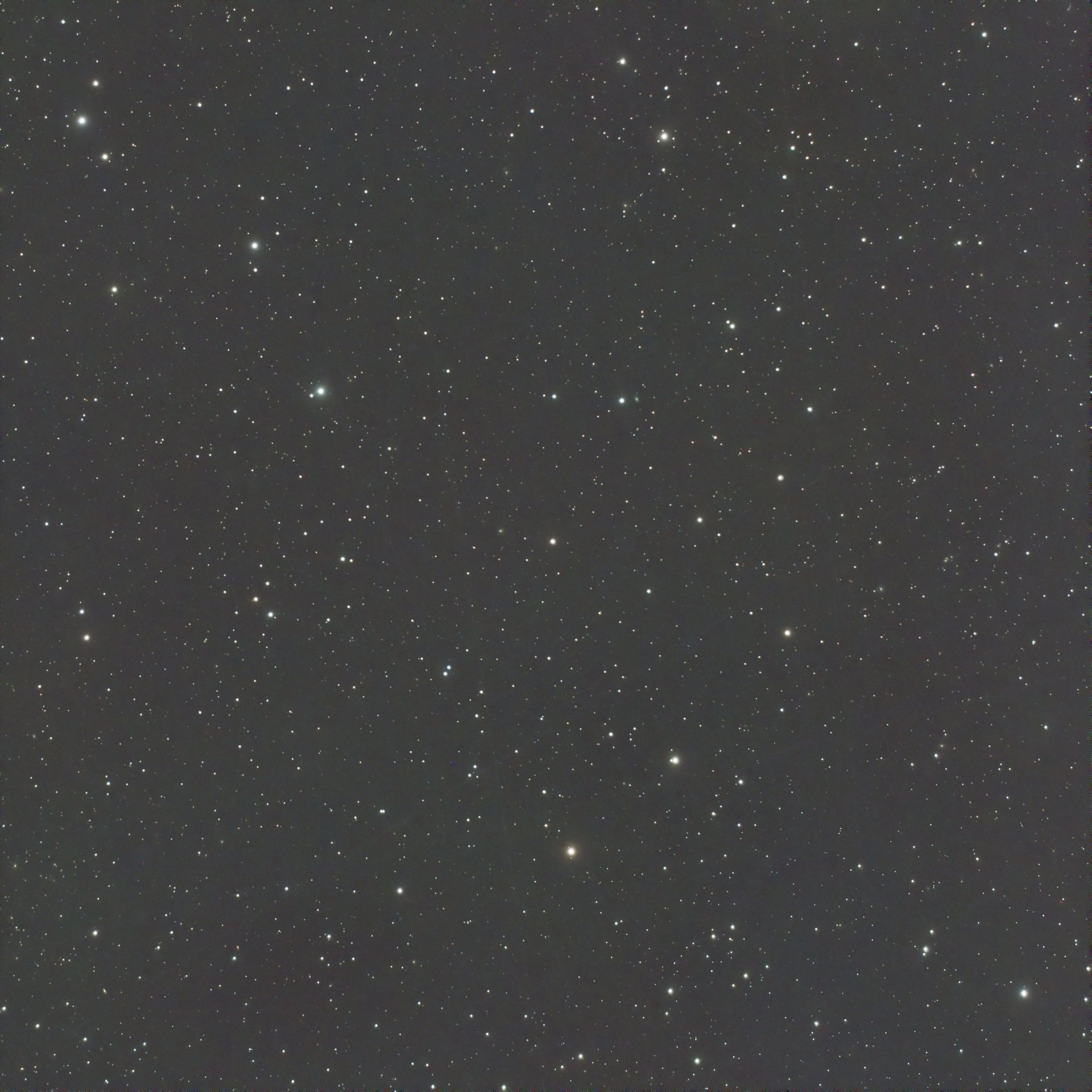
Astronomers predicted that T CrB would “explode” in early 2026 but that did not happened. Below is a paper by Dr. Alan Binder predicting that it may be in 2027.
Prediction
of T CrB
There are only four recorded brightening of
T CrB spanning a thousands years. The last two were in 1866 and 1946 but very little information was documented at those times. Now, these last two observations were 80 years apart. At this interval, it should have brightened in early 2026 but that has not happened. Dr. Binder predicts from examining the data and using a little math that it might happen in early 2027. But, the bottom line is that nobody knows for sure.
CLICK ON THE IMAGE BELOW for a PDF of Dr. Binder’s short research paper. Note: Empirical means a study using data and not direct observation.
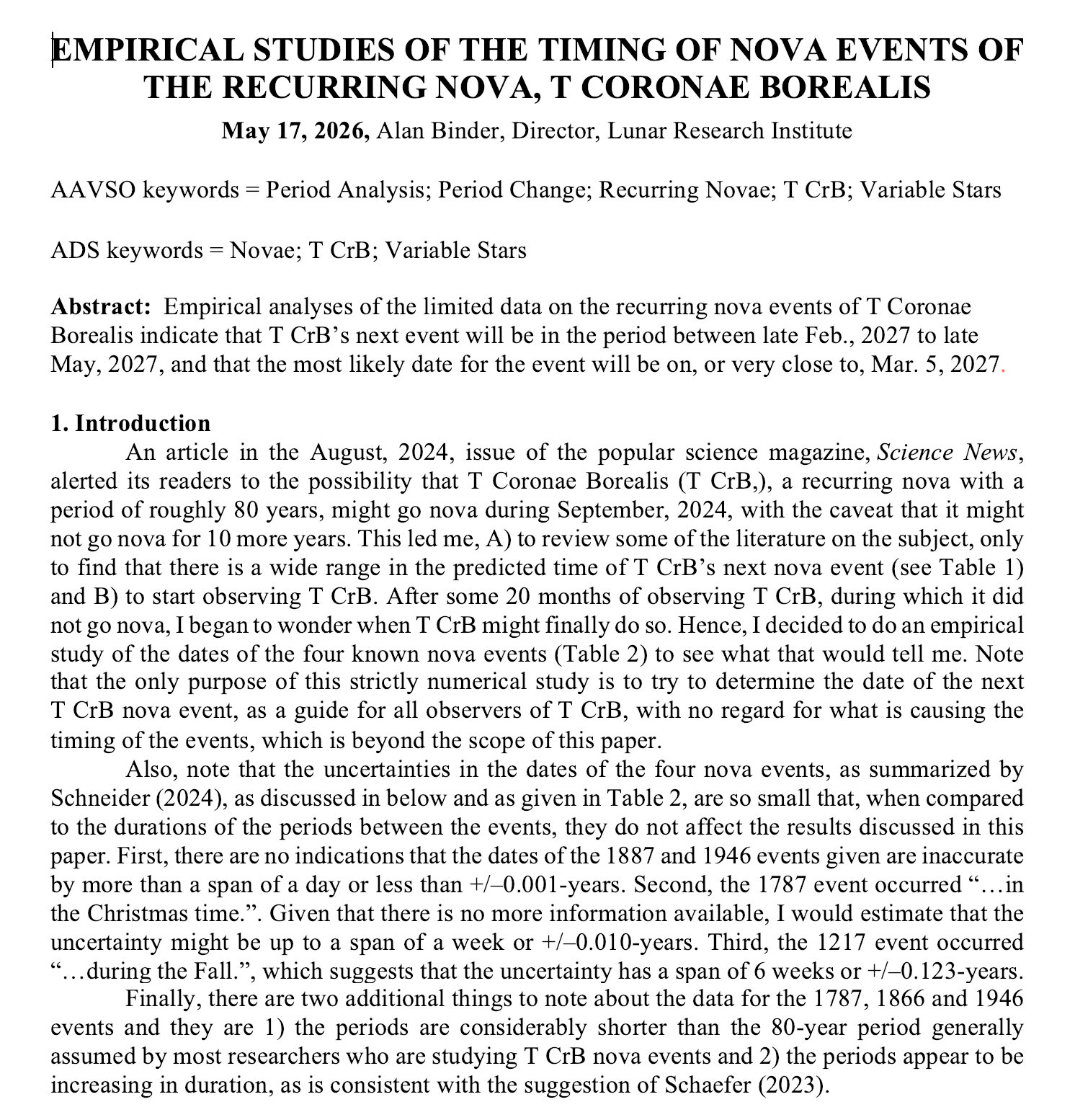
The area of this field of stars would fit in the circle showing the location of T CrB in the above chart. T CrB is in the direct center. It has an average magnitude of +10, which is faint and requires a telescope of about 3 inches in diameter to normally see. Dr. Alan Binder and many others are observing T CrB nightly to detect any brightening giving rise to it becoming a naked eye star. All of the stars in this image are very faint and not visible with the naked eyes.
Alan Binder, Ph.D.
Astronomer (Planetary Scientist)
Spacecraft System’s Engineer
Principal Investigator,
Lunar Prospector spacecraft
Keywords Search
T CrB
T Corona Borealis
Period
Analysis
Period Change
Recurring Novae
Nova
Variable Stars
Prediction of T CrB
T CrB Prediction
Blaze Star
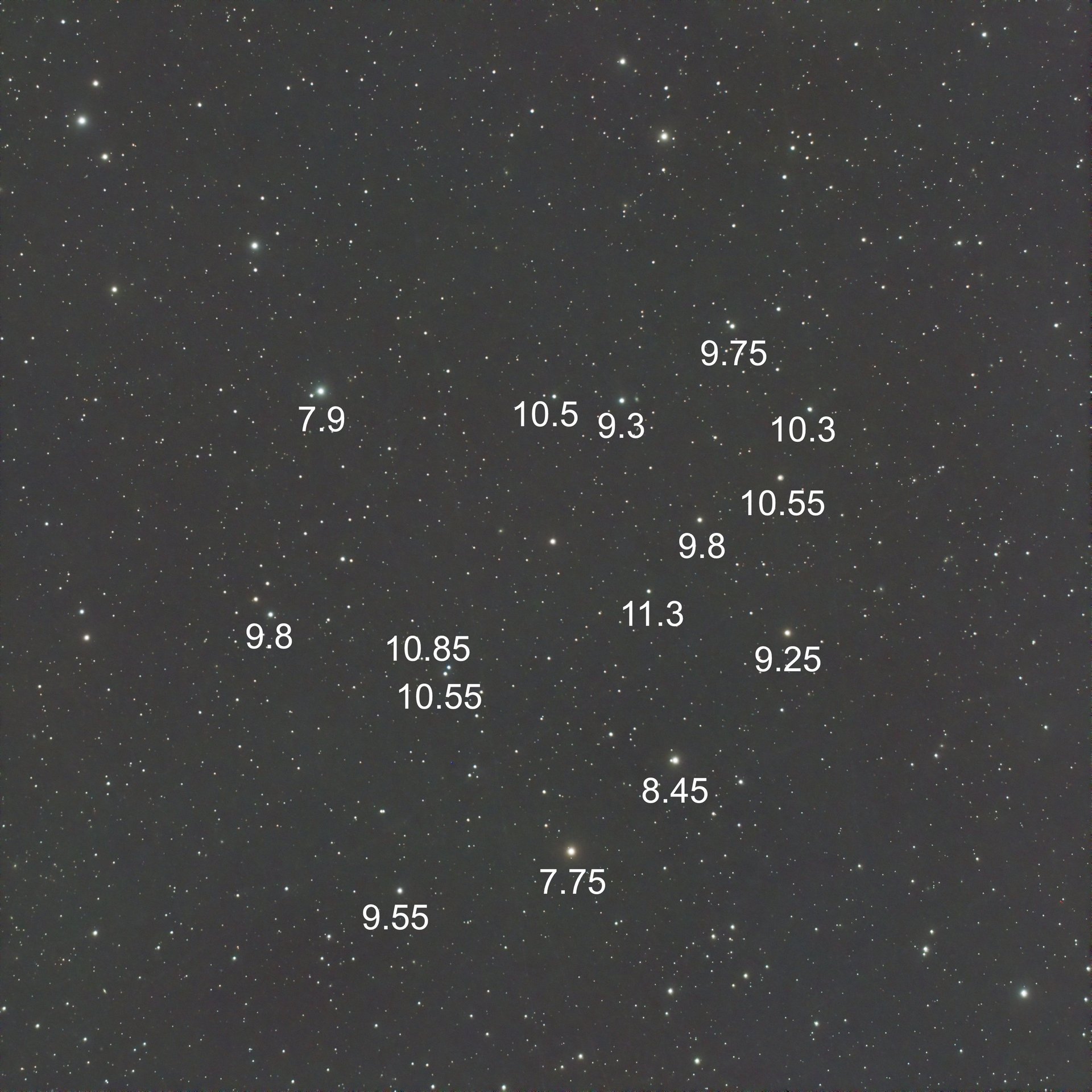
How is Dr. Binder and others measuring the brightness of T CrB? They are using telescopes to visually estimate its brightness by comparing it to other nearby stars. Others are using photographic methods. With practice, an observer can estimate a star’s brightness to about a tenth of a magnitude. Indicated above are the magnitudes of several stars surrounding T CrB. Again, T CrB is in the direct middle of the image.